Sustainability is high on the agenda for many homeowners, and for good reason. The materials that go into your home carry a real environmental impact, and windows and doors are no exception. Timber is widely regarded as the most sustainable choice, but it helps to understand why. This guide looks at responsible sourcing, modified timbers like Accoya, the carbon picture, and the practices and standards we hold ourselves to in our own workshop
A renewable, natural material
Timber is the only mainstream window material that is genuinely renewable. Trees can be grown, harvested and replanted in a continuous cycle, whereas uPVC is a plastic derived from fossil fuels and aluminium is smelted from mined ore in an energy-intensive process. Choosing well-managed timber means choosing a material that nature can replace, rather than one drawn from finite resources.
Responsible sourcing and FSC certification
Renewable only counts if the wood is sourced responsibly, which is where certification matters. We are FSC certified, meaning the timber we use can be traced to forests managed to strict environmental and social standards, where what is harvested is replanted and biodiversity is protected. The FSC label gives you confidence that your windows have not come at the expense of the world’s forests.
Accoya: sustainability and longevity combined
Modified timbers take the sustainability case further. Accoya, one of the species we work with, is made from fast-growing, responsibly sourced wood that is then treated through a process called acetylation to make it exceptionally stable and resistant to rot. The result is a timber with the durability of the very best tropical hardwoods, but from sustainable sources, and it carries Cradle to Cradle certification for its environmental credentials. Because it lasts so long, it also reduces the need for replacement, which is sustainability in itself.
The carbon case for timber
Timber also performs well on carbon. As trees grow they absorb carbon dioxide, and that carbon stays locked in the wood for the life of the product. Combined with the relatively low energy needed to turn timber into a window compared with manufacturing uPVC or aluminium, this gives timber a lower carbon footprint over its lifetime. For a considered, long-term purchase, that difference adds up.
Longevity is sustainability
The most sustainable product is often the one you do not have to replace. A well-made, well-maintained timber window can last for generations, and ours are backed by a tiered 30-year warranty. Crucially, timber can be repaired, re-sealed and repainted over its life, rather than being discarded. uPVC, by contrast, cannot be meaningfully repaired and is difficult to recycle, so it tends to end up in landfill. Buying once and buying well is one of the most environmentally responsible choices you can make.
Sustainability in our Kent workshop
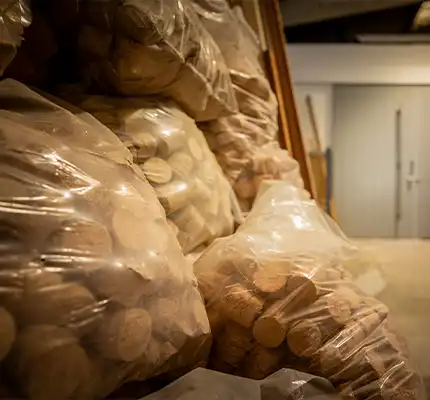
Our commitment goes beyond the material itself and into how we work day to day. Our workshop roof is covered with solar panels, supported by battery storage, which helps power our manufacturing from cleaner energy. We also turn our own waste into a resource: the sawdust and offcuts from our joinery are compressed into eco briquettes that heat the workshop and provide hot water, reducing waste and offsetting energy use at the same time. Beyond that, we reuse and recycle as much of our waste as we possibly can, keeping our footprint as low as we can make it.
Our environmental standards
These efforts are backed by formal standards. We hold ISO 14001 for environmental management and ISO 50001 for energy management, which means our environmental and energy impact is actively monitored and improved rather than left to chance, and our FENSA-approved installations meet the energy-efficiency requirements of the building regulations. When you choose us, you are choosing a manufacturer working to lower its own footprint as well as yours. If you would like to talk through the most sustainable options for your home, please get in touch.